FMFM birthday celebration honoring FMFM Founder Maria Nicholas Groves
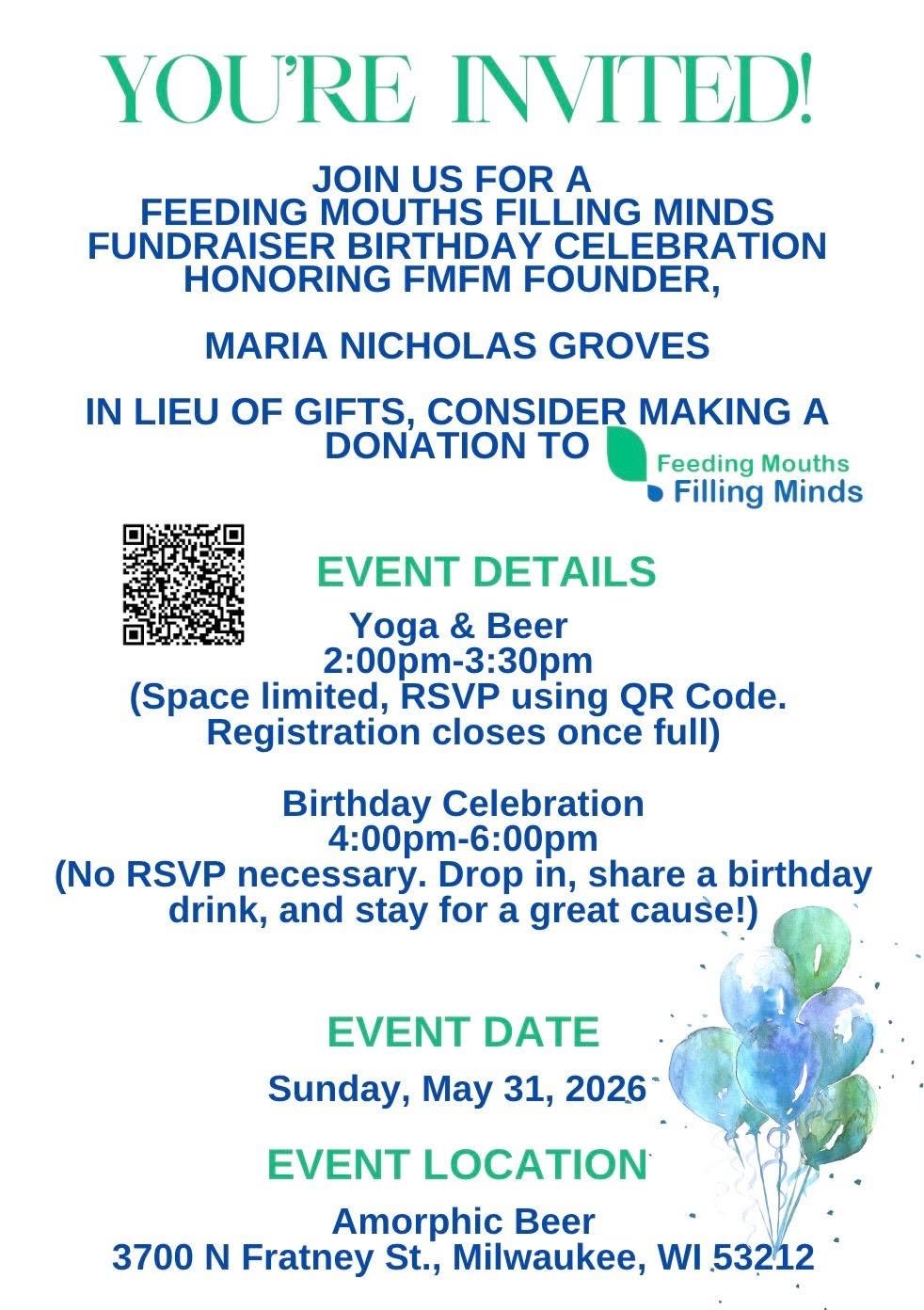
Stop in and have a cold beer or cinder to celebrate Maria‘s (belated) birthday!🎉
A few spots remaining for anyone interested in yoga.
How children in our programs dream bigger
Fueling Hope, One Meal at a Time
At Feeding Mouths Filling Minds, we believe nutrition is the first step toward possibility. When children are nourished, they can learn, explore, and dream.
At Ngong Huruma Secondary School in Kenya, a student named Moses shared his dream of becoming a journalist. With regular meals like porridge in the morning and lunch during the day, he is now more focused in school and exploring his future.
When hunger is no longer a daily barrier, students can:
Focus better in class
Ask questions
See new opportunities for their future
At Gatune Farm in Kenya, students are also:
Learning to grow food
Building skills in agriculture, problem-solving, and leadership
These efforts show how nourishment and education work together to create lasting, community-led change.
Looking ahead: Our vision for the next 5 years
The Next Chapter Begins with a Full Plate and a Clear Goal
At Feeding Mouths Filling Minds, our vision grows from the ground up. Since our early days in Kenyan school gardens, we’ve held one belief: access to nutritious food opens the door to education and lifelong opportunity.
Over the next five years, we’re deepening our impact by expanding local partnerships in West Africa. In Liberia and Sierra Leone, this means supporting schools with gardens, and food systems training, always led by local voices.
Alongside our local partners, we invest in leadership by equipping alumni to mentor, manage harvests, and teach in their communities. Our growth focuses on strategic partnerships, outcome tracking, and learning from the ground. We are advancing food access as a pathway to resilience, community by community.
Our goals for the next five years include:
Expanding school-based garden programs in under-resourced communities, building on existing models like Gatune Farm in Kenya
Supporting infrastructure projects that integrate learning and nutrition, as seen in initiatives like Koinadugu College in Sierra Leone
Building long term sustainability that has significant impact, like the farm being built in Liberia which will provide food to six schools and employ local talent
Expanding nutrition education to reach families, caregivers, and local stakeholders
Continuing to align our work with the UN global goals for food security, education, and community development
Zero Hunger (Goal 2): https://sdgs.un.org/goals/goal2
No Poverty (Goal 1): https://sdgs.un.org/goals/goal1
Quality Education (Goal 4): https://sdgs.un.org/goals/goal4
These are not just organizational milestones. They are commitments to the students who walk miles to school, to the families who tend the gardens, and to the local leaders who are building futures from the inside out.
FMFM Spaghetti Dinner Fundraiser
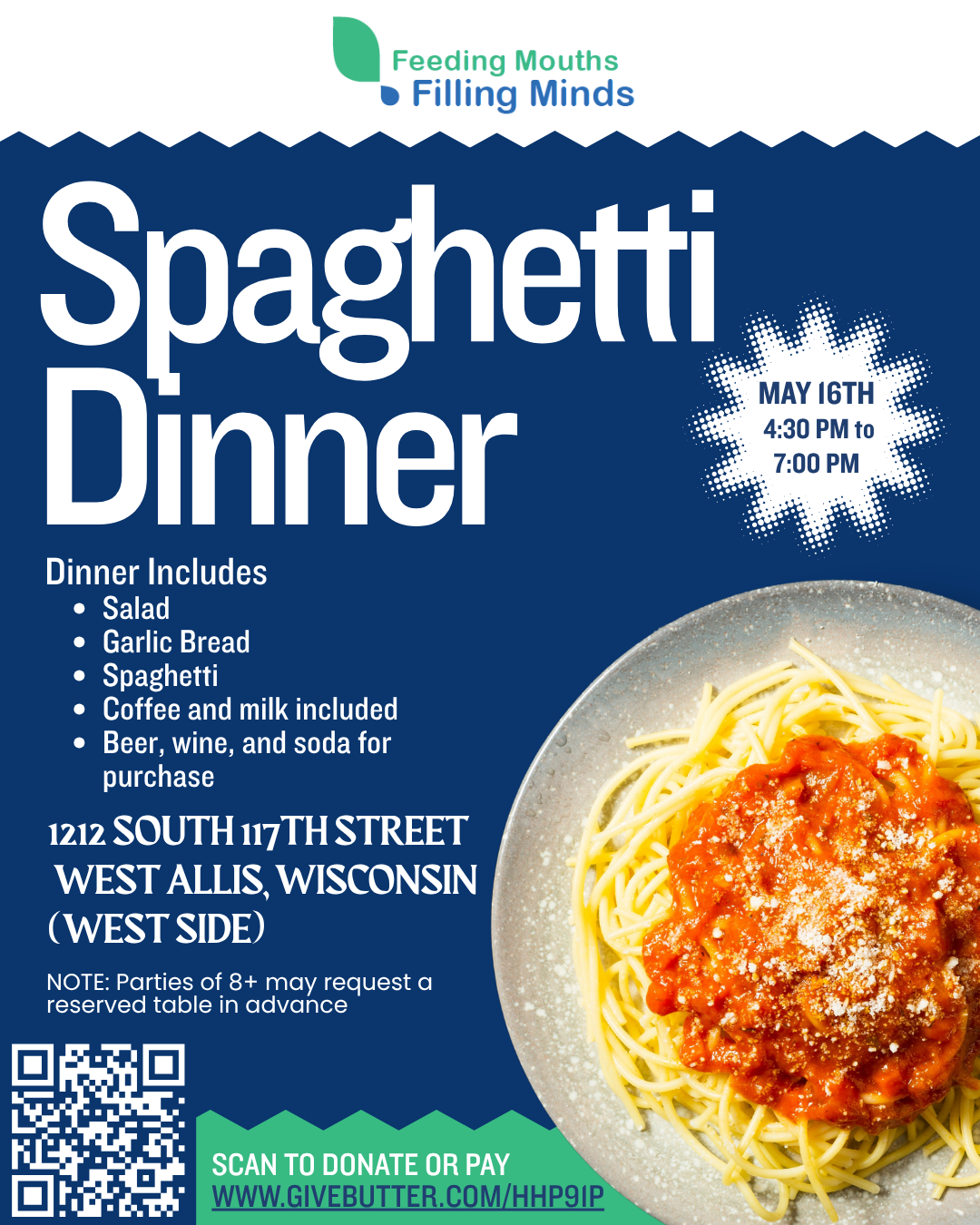
Join us for an evening where a simple meal brings people together 🍝
On May 16, our community gathers around the table to share dinner, connect, and support students in rural Africa as they focus on their education with reliable access to nutritious food.
📅 May 16
🕓 4:30–7:00 PM
📍 1212 S 117th St, West Allis, WI
Dinner includes salad, garlic bread, spaghetti, coffee, and milk, with beer, wine, and soda available for purchase.
Planning to attend with a group? Parties of 8+ can request a reserved table.
Join us at the table: www.givebutter.com/hhp91p
Share a meal and be part of something bigger.
#DinnerForACause #FMFMImpact #FeedToSucceed #CommunityTable #StrongerTogether #SupportEducation #EndHungerTogether
School Gardens that Feed Minds: How they teach sustainability too
Growing Lessons: How School Gardens Cultivate Learning and Community Strength
At Feeding Mouths, Filling Minds, school gardens are not just about growing food, they are part of a larger, community-led approach to education and nutritional access.
In Kenya, students grow vegetables that are included in their daily school meals. These gardens are planned and maintained by students and the community. This model contributes to economic sustainability for families and reinforces local participation in shaping local environments.
The gardens also serve as hands-on classrooms. Educators connect agricultural practice with academic learning, using real-time examples to teach plant cycles, water conservation, and soil health. Students gain practical knowledge that supports both their personal growth and their communities' well-being.
FMFM works in collaboration with in-country partners to fund tools, support training, and co-develop long-term strategies. These efforts are guided by local priorities and designed for continuity, with a focus on nutritional sustainability and educational access.
Projects like these are made possible through donor support that invests in community-led approaches designed for long-term sustainability.
Behind the Scenes: How we choose partners and assess local needs
Shared Groundwork: How We Build Toward the Right Projects
At Feeding Mouths Filling Minds, our work begins long before a project breaks ground or a meal is served. It starts with a conversation.
In 2023, our team began exploring potential collaboration with a rural school network in northern Ghana. Their leadership expressed a desire to build a more consistent school feeding program and to expand agricultural learning for students. But instead of jumping straight into funding, we took a different approach.
Together with our In-Country partners, we facilitated a series of assessment visits. These were not top-down inspections. They were walking tours with school staff, meetings with student groups, and dialogues with local farmers and cooks. We asked about meal patterns, current garden practices, teacher engagement, and the kinds of support the community felt confident managing over time.
This listening-first process helps us evaluate a range of factors:
Leadership readiness — is there shared energy, structure, and vision for the project?
Nutritional needs — what gaps are students currently facing in the meals they receive?
Local capacity — what resources, skills, and ideas already exist on the ground?
These are not checkboxes. They are entry points for building trust and shaping plans that reflect local ownership. This is how we select partners and develop projects that are carried forward after the initial funding ends.
The school in Ghana has since begun co-developing a plan for a student-run garden and community-supported lunch program. And because of the groundwork laid early, that plan belongs to them — not to us.
First Plates, First Impact: Stories from Liberia’s School Feeding Program
🌍 Help us feed more students across Africa.
From Coop to Classroom: Bumbogo Students Feed Their Future
💚 Thanks to your support
Because of you, the Bumbogo school farm continues to grow. Students aren’t just learning; they’re leading.
From farm to plate, your support helps students grow their own nourishment. 🌱🐔
This #GivingTuesday, helps us grow more school farms across Africa.
From Seed to Sustenance: Gatune School Farm is Growing Futures
From seed to sustenance 🌱
At Gatune School, students are learning by doing and growing kale, maize, and beans that contribute to daily school meals. This hands-on farming project builds practical agricultural skills, supports reliable nutrition, and strengthens long-term food security through local leadership and shared ownership. Together with our partners and supporters, we’re helping students focus on their future.
2025 in Focus: Growing Together Across Borders
𝟮𝟬𝟮𝟱 𝗶𝗻 𝗙𝗼𝗰𝘂𝘀: 𝗚𝗿𝗼𝘄𝗶𝗻𝗴 𝗧𝗼𝗴𝗲𝘁𝗵𝗲𝗿 𝗔𝗰𝗿𝗼𝘀𝘀 𝗕𝗼𝗿𝗱𝗲𝗿𝘀 🌍
This year, we worked alongside students, school leaders, and community partners in four countries to make something truly powerful:
🌿 More sustainable school farms
🍽️ More dependable school meals
📚 More students empowered to stay in school
Here are just a few of the milestones we reached together in Liberia, Sierra Leone, Rwanda, and Kenya, with thanks to our incredible country leads and partners.
@CountryLeadLiberia @CountryLeadSierraLeone @CountryLeadRwanda @CountryLeadKenya
💚 Thank you to every donor, volunteer, and partner who helped bring these numbers to life.
With Gratitude in Every Step: A Holiday Message from FMFM
𝗪𝗶𝘁𝗵 𝗚𝗿𝗮𝘁𝗶𝘁𝘂𝗱𝗲 𝗶𝗻 𝗘𝘃𝗲𝗿𝘆 𝗦𝘁𝗲𝗽 💚
As we close out the year, we’re filled with gratitude for every donor, partner, volunteer, and advocate who stood with us in 2025.
Because of you, more students in Liberia, Sierra Leone, Rwanda, and Kenya received reliable meals, learned life-changing agricultural skills, and stayed in school with full stomachs and bright futures.
Your belief in sustainable, student-led solutions makes our work possible and our communities stronger.
🌱 𝘓𝘦𝘵’𝘴 𝘬𝘦𝘦𝘱 𝘨𝘳𝘰𝘸𝘪𝘯𝘨 𝘵𝘰𝘨𝘦𝘵𝘩𝘦𝘳.
Your continued support helps us carry this momentum into 2026, and we can’t wait to share what’s ahead.
✨ Here’s a 𝘩𝘪𝘯𝘵: In 2026, we’re going even deeper by investing in leadership, scaling impact, and building more locally-led solutions that last.
Clearing the Path, One Brick at a Time
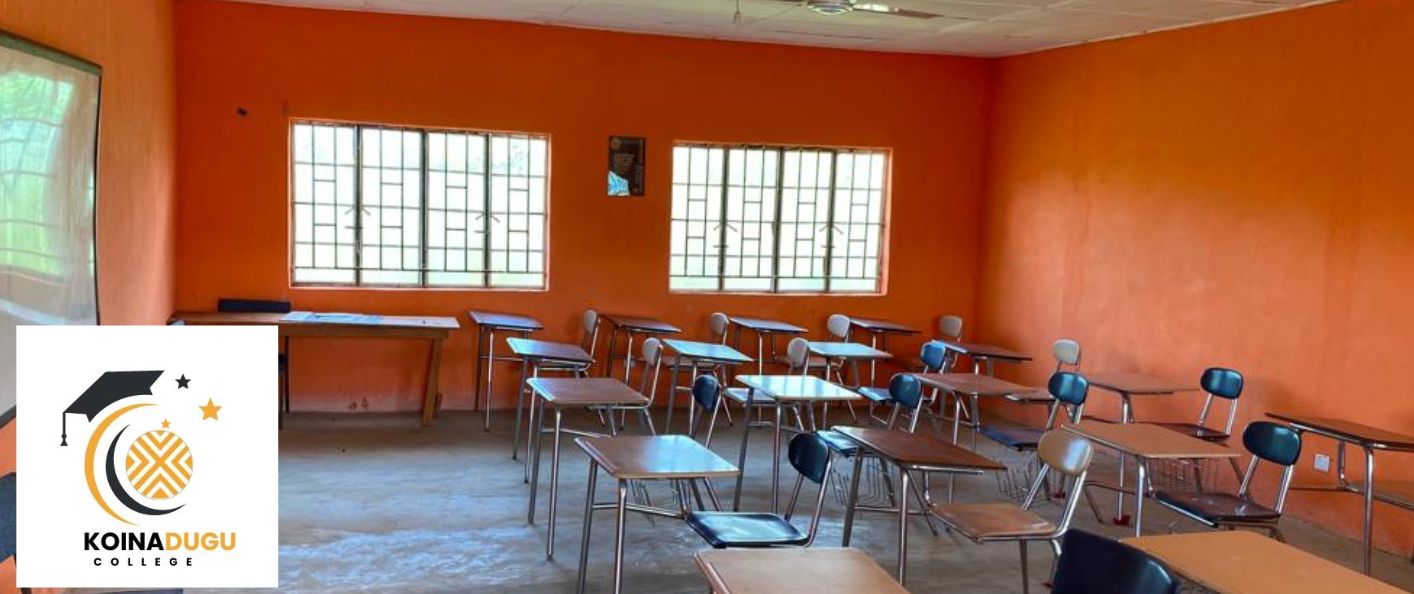
There’s no ribbon-cutting in the early stages. Just grit, shared purpose, and a commitment to lasting impact.
In Sierra Leone, the foundation of Koinadugu College started with overgrown land and an unmet need. Students were traveling many hours away to attend college, preventing them from living in their community. This was a financial burden. The community envisioned something better: a permanent, safe space for learning.
That vision moved forward through collaboration. Project 1808, our on-the-ground partner, led efforts to build the strategy and drive the execution with local leaders and residents. Together, they cleared land, mixed cement by hand, shaped blocks on site, and sketched classrooms in the dirt.
Feeding Mouths Filling Minds contributed planning and funding along with Strides for Africa. Now KC is a thriving College with clean water, food sources, flushable toilets, and social enterprises which support student health and learning.
Koinadugu College, along with its educators and local chiefs and community members, played the central role in bringing this vision to life.
This is how we build: intentionally, collaboratively, and with the long view in mind. Every trench and wall reflects a shared belief that education, nutrition, and dignity are connected, and that local leadership drives meaningful, lasting change.
Nourishing Potential: How School Meals Strengthen Learning and Community
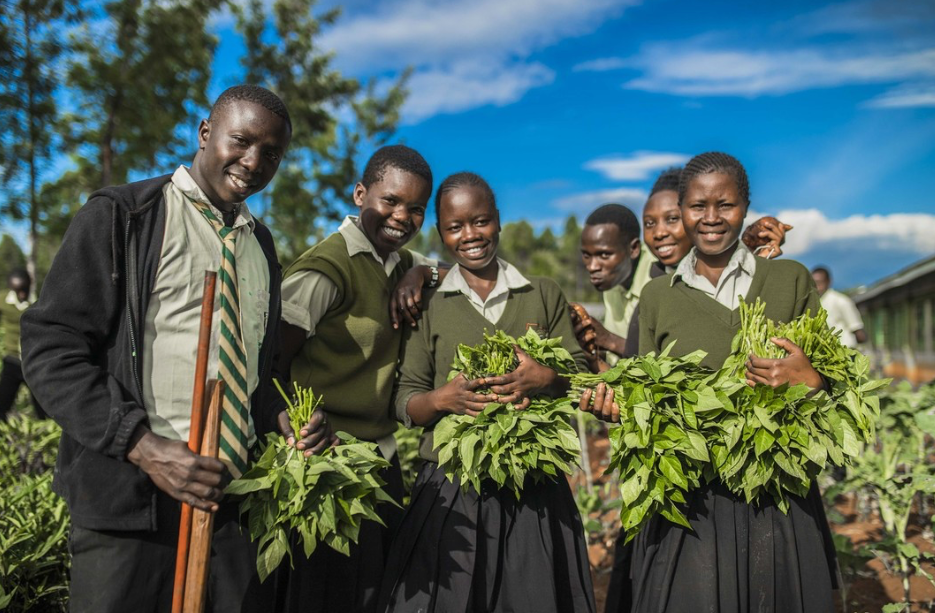
Across the rural schools FMFM partners with, one consistent factor is making a difference: the presence of a school meal.
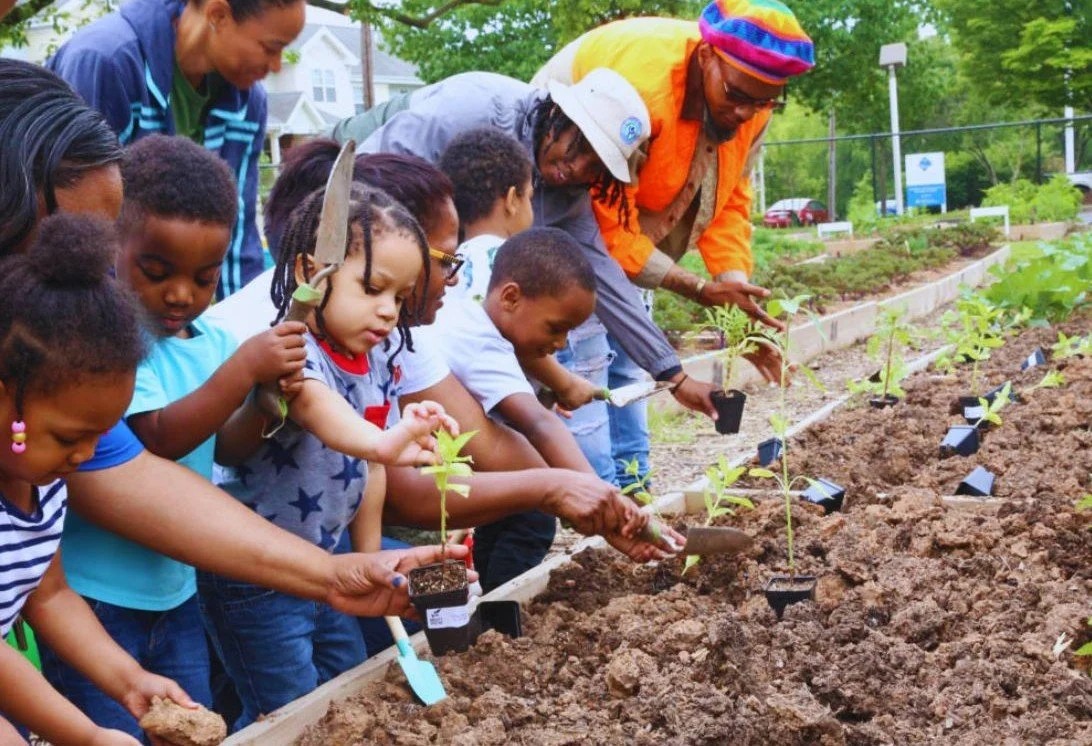
Access to a dependable, nutritious meal during the school day helps students stay engaged in class, improve concentration, and build connection.
When our team visited six rural schools in Rwanda, we found that five offered no fruits or vegetables in their snacks
This wasn’t due to drought or poor soil, but rather the rising cost of food. In schools without any meal program, several teachers shared that lunchtime was difficult. Some students would leave and would not return. Yet, local solutions are emerging. At one school, families and staff collaborated to start a small garden. It became more than a food source. It became a shared project, an agricultural learning space, and even a small source of income for caregivers. Students began learning about farming practices, food systems, and nutritional sustainability. These are lessons they can carry into their futures.
Nourishing Potential: Linking School Meals to Student Success
It All Begins Here
Across the schools we partner with in rural Africa, daily school meals are making a measurable difference in children’s lives.
In Rwanda, FMFM teams recently visited six rural schools. Five of them lacked fruits or vegetables in their lunch programs, not because of climate challenges, but due to food procurement costs. In schools without meals, educators reported that hunger was directly affecting learning. Some teachers even left the cafeteria during lunch to avoid seeing students without food.
But we also saw what change looks like. At one school, local parents helped start a small garden. Today, that garden supports regular meals that include fresh produce. Students now stay focused in class, absenteeism is down, and the garden has become a learning tool in itself. Children are gaining knowledge about nutrition and agriculture. Families are earning income by participating in its upkeep.
This is the impact of your support. Each donation helps provide dependable, nutritious meals that directly contribute to improved health, stronger classroom performance, and increased school retention. The outcomes are visible in the meals served, the lessons learned, and the lives strengthened.
Community-Powered Impact Investing in Sustainability, Education, and Local Leadership
At Feeding Mouths Filling Minds, we don’t just support projects—we invest in people. Every initiative we fund is built in partnership with local educators, trainers, community members, and leaders. They are long-term collaborations that promote education, economic stability, and environmental sustainability.
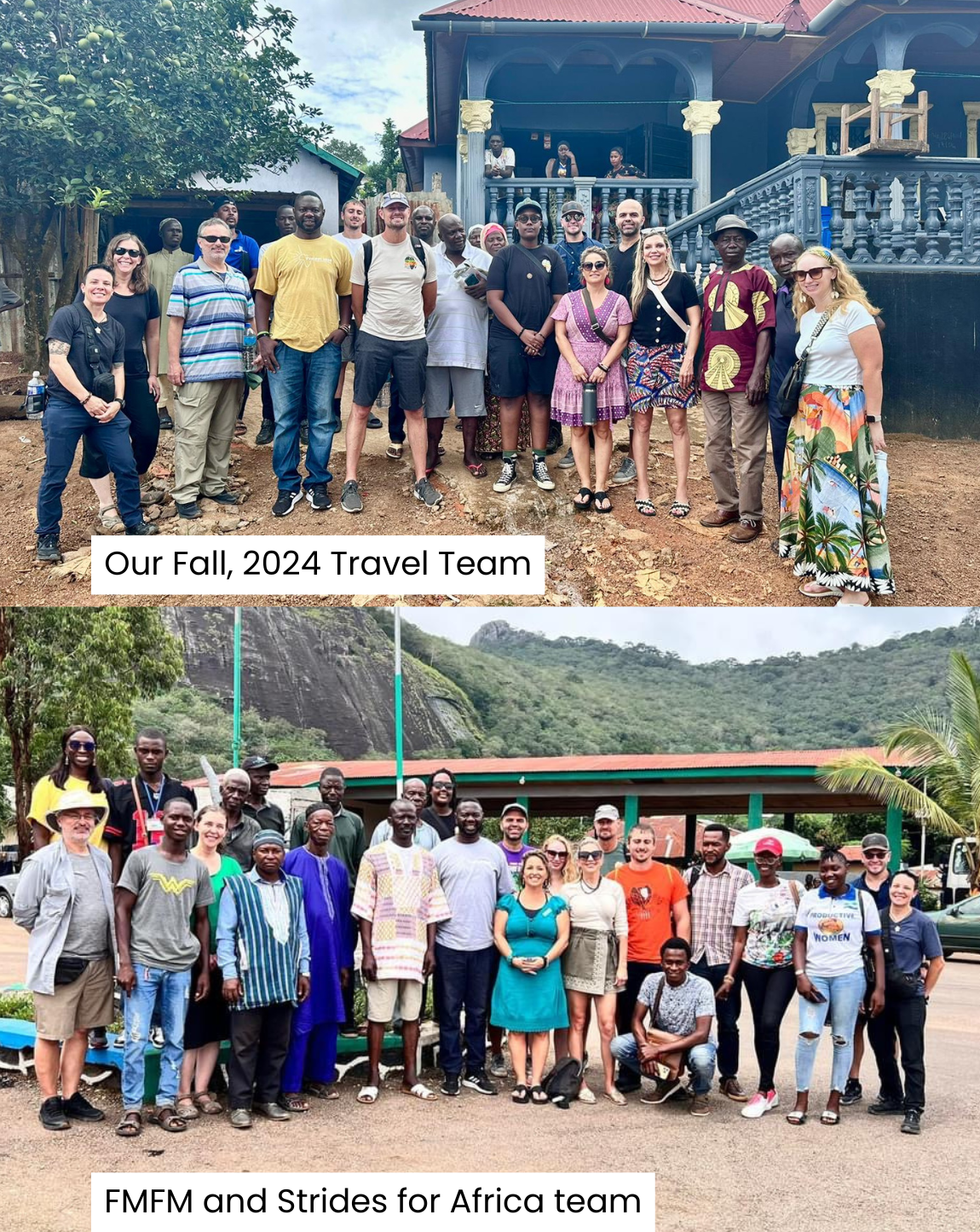
In Rwanda,
Regenerative mushroom farming is more than a source of nutrition. It’s a community-centered solution strengthening food security, generating sustainable income through local sales, and encouraging better attendance for the 221 children it serves.
In Kenya,
Student-led farming at Gatune is more than a source of school meals. The integrated farm doubles as a living lab that empowers women, creates seasonal jobs, and builds lasting food security for 400 students and their community.
In Sierra Leone,
Students at Koinadugu College are leading campus-wide sustainability through native and fruit tree planting. These efforts enrich biodiversity, create green learning spaces, and build student leadership in environmental stewardship.
We work alongside these leaders through project co-development, regular assessments, and site visits. Our focus is always on amplifying local vision and expertise.
Happy International Charity Day
On this International Day of Charity, Feeding Mouths Filling Minds celebrates the generosity and shared commitment that drive our mission.
We believe charity creates the greatest impact when it is rooted in local leadership and strong partnerships. In the communities we serve, this approach is already creating change. In Liberia, our partnership with Humanity Care Liberia has expanded the Home Grown School Feeding Project, reaching more than 1,600 people through school farming, nutrition education, and skills-building. Across Kenya, Rwanda, Tanzania, and Sierra Leone, students are staying in school, families are engaged, and communities are leading the way.
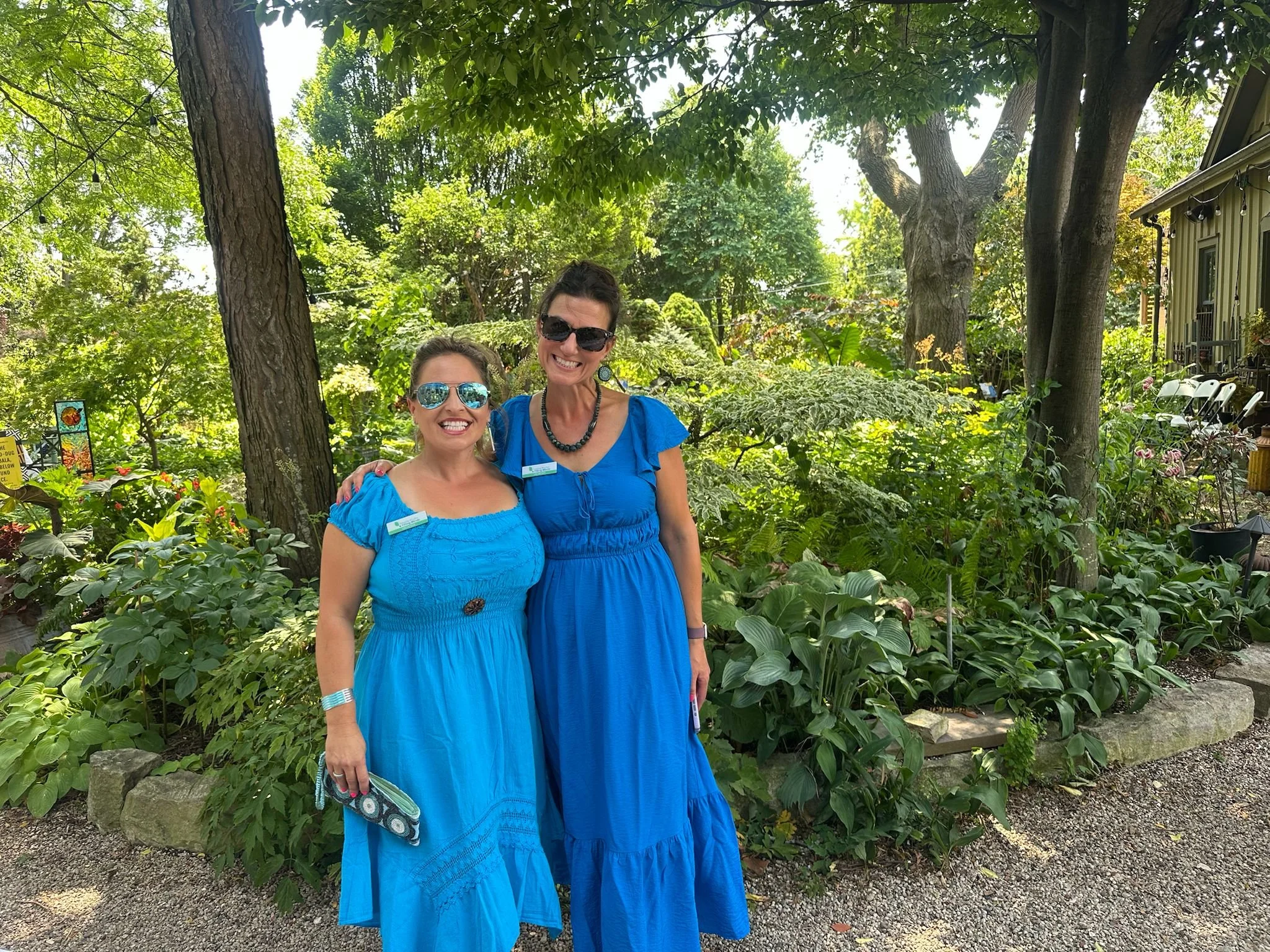
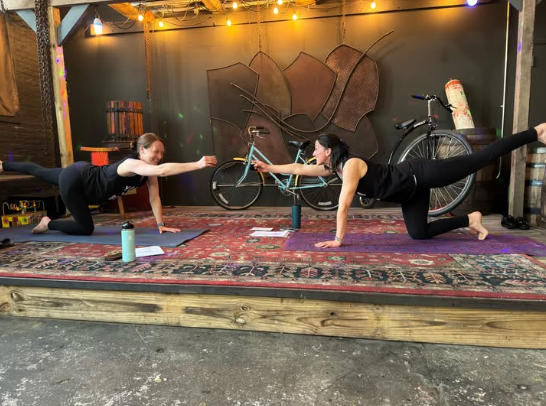
Recent events like Garden of Giving and Balance with a Brew helped raise essential funds for six new projects underway in 2025. These community-driven initiatives will focus on school-based agriculture, women’s empowerment, solar-powered water access, and classroom support, all guided by trusted local partners.
This fall, two exciting events are bringing communities together to support our mission: Pickleball for a Purpose and our Tennis Tournament. Whether you're swinging a paddle or cheering from the sidelines, each match played helps move our work forward.
Although August’s drink specials at La Finca Coffeehouse have concluded, the impact continues thanks to every cup poured and every gift made.
As we mark the International Day of Charity, we are deeply grateful for every act of generosity that helps feed minds, fuel futures, and build stronger communities.
Thank you for being part of this work.
When the Walk to School Ends With a Meal, Learning Begins
Feeding Mouths Filling Minds has always been shaped by listening. We listen to local leaders and students. This includes listening to stories that begin long before the school day does.
In many of the communities we serve, the journey to school is not short. In Tanzania some students begin before sunrise. They walk over hills, through quiet villages, across uneven ground and this is after they do chores for their family, such as fetching water.
And still, they arrive.
A partner teacher in Bukoba , Tanzania, shared something that stays with us. “They walk with purpose. But when they arrive and know there’s food and water, they walk with relief too.”
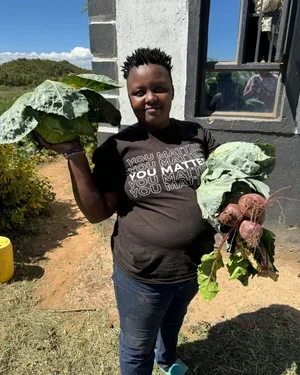
This is why we believe school meals are not just support. They are the core infrastructure. When food is available at school, it does more than fill a stomach. It supports attendance, improves focus, and allows students to stay for the entire day. It affirms that the long walk is worth it.
In Kenya, the Gatune school farm feeds over 400 students while engaging staff, students, and community members. This includes involvement in growing food, learning agricultural and leadership skills, and supporting women’s empowerment and employment. This is a student-led model of nutritional and economic sustainability.
When we support meals, we are not just providing food. We are meeting students’ determination with dignity. We are helping them stay, focus, learn and gain an education.
"The Gatune project is transforming lives by providing nutritious meals from its produce, ensuring well-being and fostering a healthier, brighter community."— Stephen Gakombe , Gatune Farm Manager
From School Meals to Social Impact
Feeding Mouths Filling Minds has always believed that nutrition fuels more than just the body. It gives children the strength to show up, the focus to learn, and the chance to dream about what comes next. It lays the groundwork for confident students, vibrant learning communities, and resilient futures.
At Huruma School in Kenya, students are not only receiving meals, they have connected with peers across the world. Through our global student program, Huruma students have been exchanging letters with a school in Wisconsin, sharing stories about their lives, school routines, and dreams for the future.

In one letter, Sarah Waithera, a Grade 12 student, wrote:
“The great reason why I am writing this letter is to create friendship between me and you... I like that we will interact together and know more about each other.”
At Maria Nicholas Groves School of Excellence (MNGESS) in Liberia, FMFM supported teacher training to help enable our educators. They continue to lead programs, teaching students practical skills rooted in their own community.
Across FMFM-supported areas, alumni are stepping into leadership.. They are guiding farming, starting businesses, or teaching in the very schools they once attended. These are not sweeping changes, but steady ones made possible by local partnerships and consistent support.
What began as a school meal or a garden lesson has grown into something more. This is how the next generation of leaders begins.
“Feeding our minds helped us imagine something more. Now we’re making it real.” – Shared by a community mentor in Liberia
World Humanitarian Day
This year’s theme, “We are Humanitarians,” celebrates people advancing health, education, and safety through steady local action. At Feeding Mouths, Filling Minds, we honor our in-country partners whose leadership reflects these values every day.
In Bong County, Liberia, we celebrate Sam and Yorlor of Humanity Care Liberia and the caregivers at Maria Nicholas-Groves School of Excellence (MNGESS) for their commitment to strengthening schools and communities.
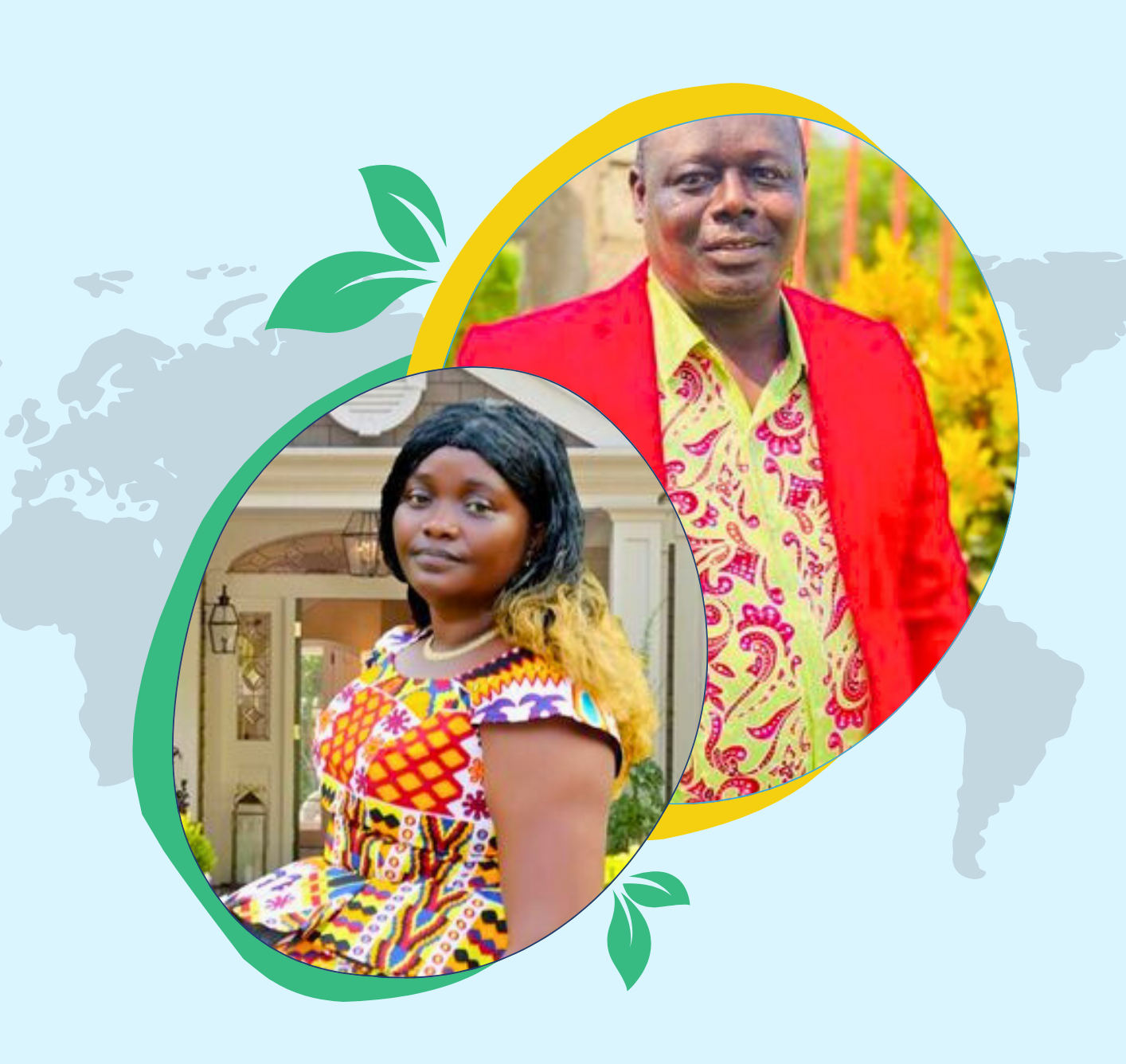
Together with Feeding Mouths, Filling Minds, they led the purchase of 10+ acres of land now being prepared for cultivation. Once produced, it will provide nutritious food for students at six schools and support local livelihoods.
Sam and Yorlor’s leadership shows the heart of humanitarian work through quiet, steady efforts that plant seeds, create spaces for nourishment, and share skills to strengthen communities.
This World Humanitarian Day reminds us that impact starts with everyday actions like growing gardens, sharing knowledge, and preparing students for their future. By supporting leaders like Sam and Yorlor, we can help children in Liberia get the nourishment they need to learn, grow, and thrive.
Garden of Giving: A Heartfelt Thank You
FMFM’s Summer Fundraiser: GARDEN OF GIVING
A Fundraiser for Feeding Mouths Filling Minds: a 501c3 nonprofit dedicated to providing nutritious food sources for children in Africa, enabling them to focus on their education and future.
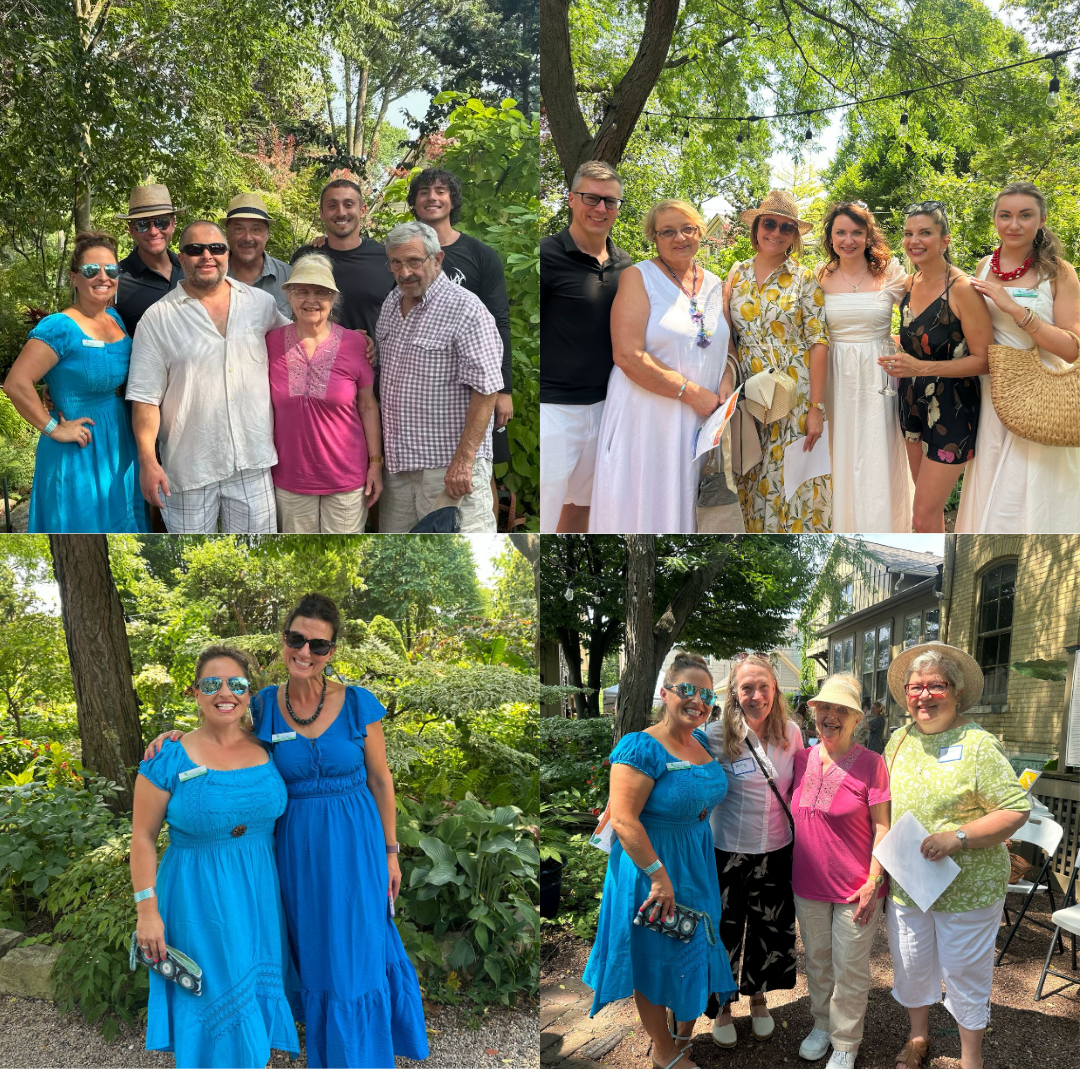
This summer, the Garden of Giving bloomed at Sanger House Gardens in Milwaukee because of you.
Your generosity and enthusiasm turned one afternoon into a global act of kindness. Together, we are moving closer to eliminating hunger as a barrier to education, one garden, one meal, one child at a time.
Since our founding, Feeding Mouths Filling Minds has completed 39 projects in 8 countries, reaching more than 23,000 people. Every public donation goes directly to programs, thanks to private donors who cover administrative costs.
This year’s event moves us toward our $21,000 goal to fund six new community-led projects in Kenya, Tanzania, Rwanda, and Liberia, and to empower students at Pathways High in Milwaukee through hands-on global learning.
Your gifts will strengthen agriculture and nutrition, empower women, expand education access, and build critical infrastructure for safe, productive school farms.
Every ticket, every auction item, and every donation has planted seeds that will grow for years to come, nourishing children, strengthening families, and building thriving communities.
From Milwaukee to Africa, the ripple effect starts with you, and it is only just beginning.