Rooted in Action, Aligned for Impact
Feeding Mouths Filling Minds didn’t set out to meet global benchmarks. We set out to listen, to learn, and to act with purpose and with people. Over time, something powerful happened. As our work in nutrition and education deepened, it began to align closely with global goals that seek to create a healthier, more equitable world.
These goals are known as the United Nations Sustainable Development Goals (SDGs), a set of 17 interconnected targets adopted by all UN Member States in 2015 as part of the 2030 Agenda for Sustainable Development. They offer a shared blueprint for peace and prosperity, both for people and the planet. The goals range from eradicating hunger and poverty to promoting inclusive education, gender equity, clean energy, and sustainable economic growth.
United Nations. (2015). Transforming our world: The 2030 Agenda for Sustainable Development. United Nations General Assembly. Retrieved from https://sdgs.un.org/2030agenda
“We’re not chasing global goals. We’re living them out by investing in local leadership and solutions that last.” — FMFM Partner
At FMFM, we see this alignment not as a checklist but as a reflection of how community-rooted efforts can echo on a global scale. Our work directly contributes to several of these goals:
Goal 2: Zero Hunger
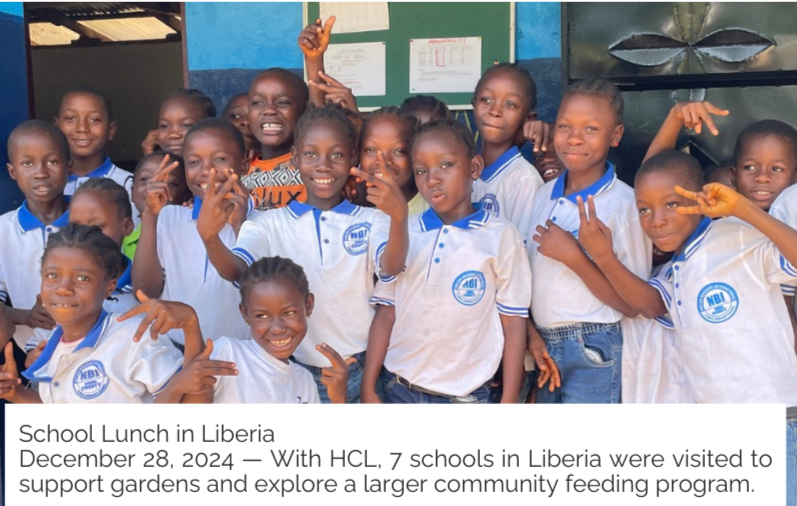
In Liberia, FMFM is actively collaborating with Humanity Care Liberia and seven local schools to develop a sustainable school meal program that goes far beyond just feeding students. This initiative directly addresses Goal 2 by reducing hunger through daily nutritious meals, and it’s built to last. The meals are sourced from crops grown and processed locally, including cassava that is dried and turned into gari, a staple West African food.
Goal 8: Decent Work and Economic Growth
The program is creating job opportunities for women in the community, from preparing meals to processing and preserving crops. This strengthens both household incomes and local economies.
Goal 17: Partnerships for the Goals
This project reflects collaboration in action: between FMFM and HCL, the leadership and PTA of the schools, and the students themselves who are actively engaged in the process.
This alignment isn’t a checklist. It’s a reflection of how grassroots, community-driven efforts are already moving the world forward, one school meal, one harvest, and one student at a time.
