THE ISSUE
Children have big plans. Basic needs shouldn’t stand in their way.
For some children in East and West Africa, school begins before they’ve had enough to eat. A meal at school may not be available. At home, filling foods may be easier to find than the eggs, vegetables, and other nutrient-rich foods growing children need.
Water adds another challenge. When it takes time to collect, that time comes out of a family’s day. When a school lacks dependable water and a place to wash hands with soap, children must learn without basics that support their health and dignity.
The numbers tell part of the story
1 in 3 children under age five in Africa experienced severe child food poverty in UNICEF’s 2024 analysis. That means eating from no more than two food groups a day—a diet that can leave out vital nutrients.
More than 100 million children in low- and lower-middle-income countries go hungry each day, according to the World Food Programme. Millions go to school on an empty stomach, making it harder to concentrate and learn.
429 million school-age children worldwide lacked basic drinking water at school in 2025. 545 million lacked a basic way to wash their hands there with soap and water.
One missing basic can affect so much more.
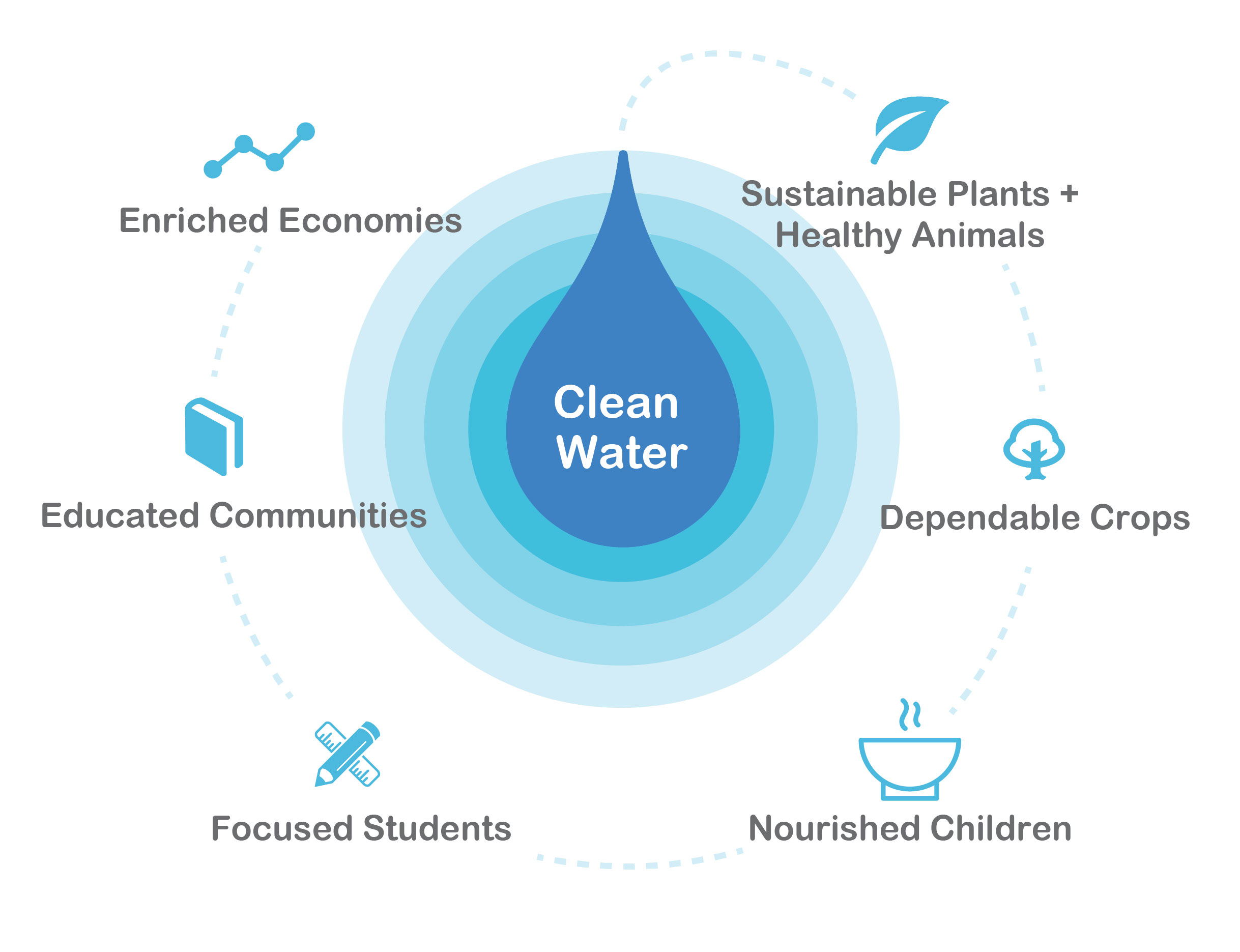
Water helps families grow food and helps children stay healthy and ready to learn. This graphic shows one way that basic needs connect.
A child who is hungry still has ideas and ambitions. A student at a school without water still wants to learn. The problem is that meeting basic needs can take time, energy, and resources that children and families could put toward their futures.
Children deserve a fair chance to grow, learn, and thrive.
Across the communities where FMFM works—from Liberia and Sierra Leone to Kenya, Malawi, Rwanda, and Tanzania—people are working to build that future. Children should have the food, water, and healthy school environments they need to take part in it.
A GLOBAL EFFORT
The challenges children face are connected—and so are the solutions. The United Nations’ 17 Sustainable Development Goals are a shared plan to improve lives and protect the planet by 2030.
FMFM’s work contributes most directly to four goals:
Goal 2: Zero Hunger — Nutritious food and sustainable food sources
Goal 3: Good Health and Well-Being — Healthier children, families, and communities
Goal 4: Quality Education — Helping children stay healthy and ready to learn
Goal 6: Clean Water and Sanitation — Safe water and better hygiene at home and at school
Learn more about the Global Goals at http://www.globalgoals.org/.